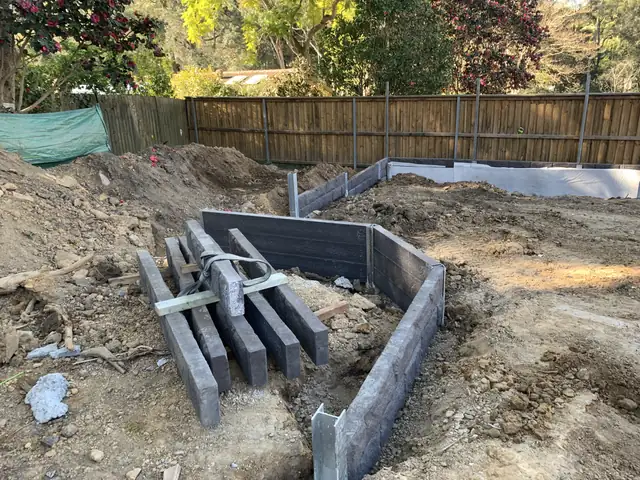
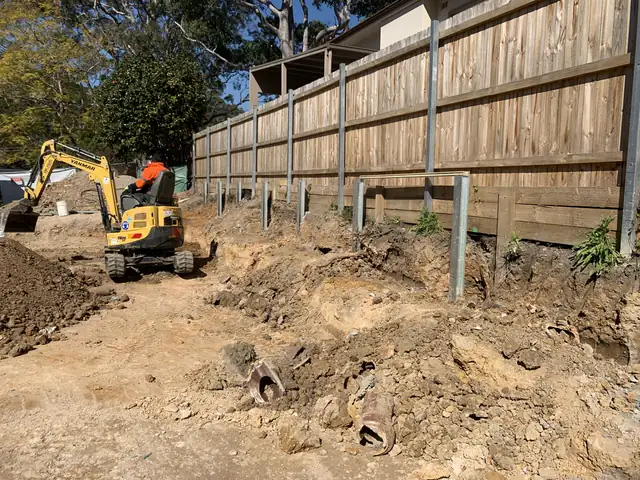
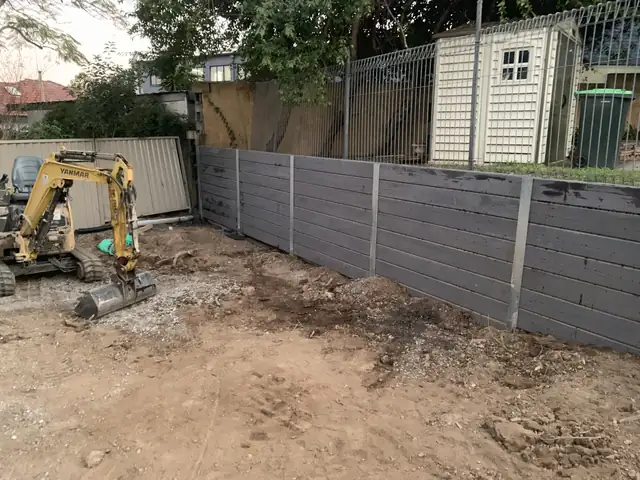
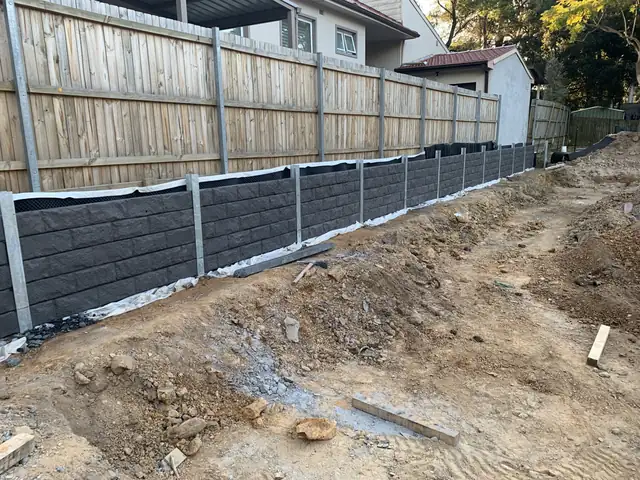
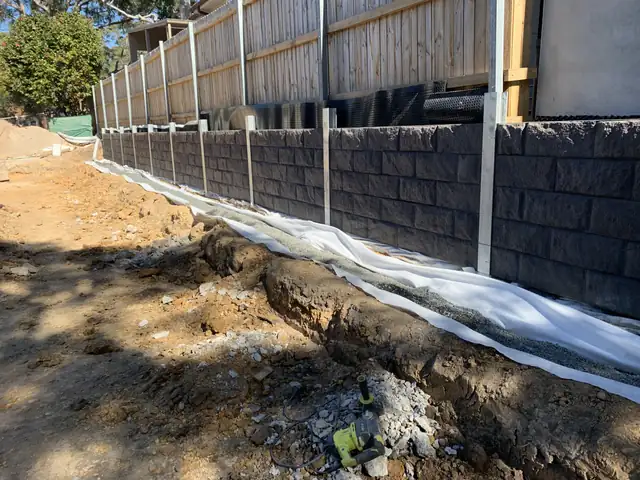
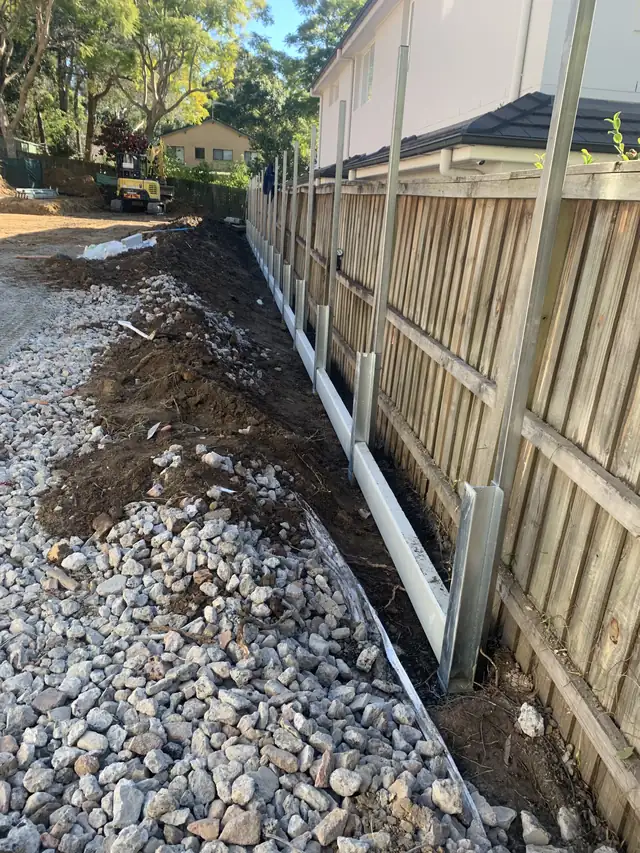
Concrete sleeper walls use reinforced concrete sleepers slotted between galvanised steel posts that are concreted into the ground. Done properly, they are one of the best-value ways to hold back soil in Sydney — they won't rot, they won't be eaten by termites, and they handle the heavy clay and sandstone ground you find across most of the city.
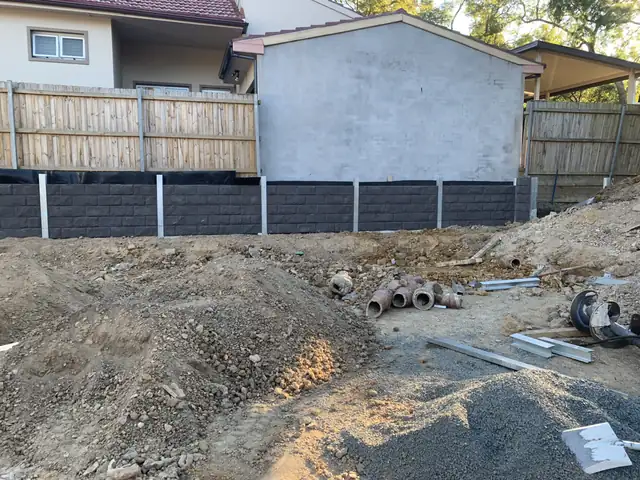
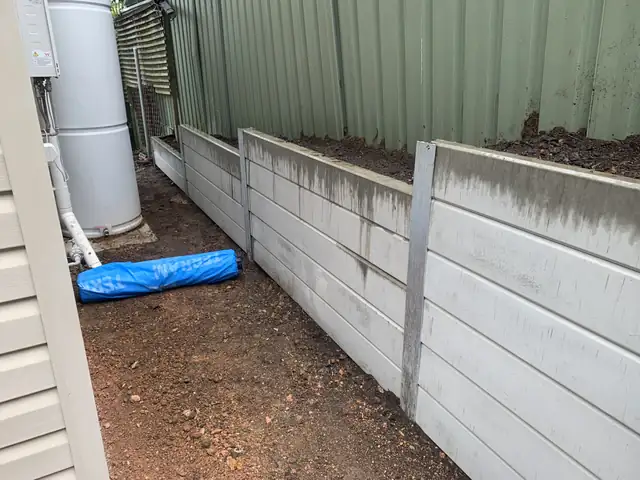
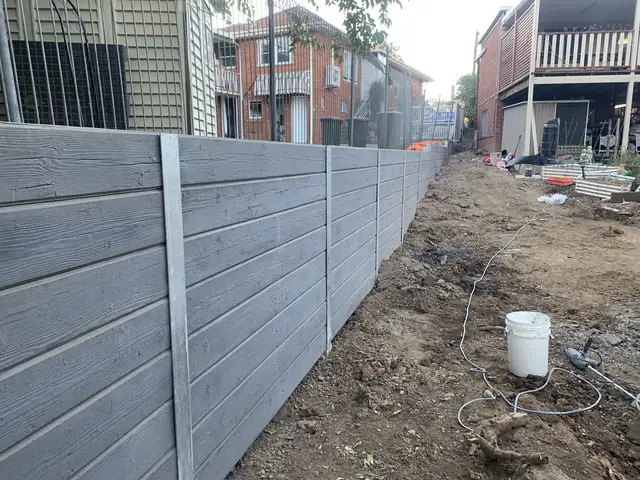
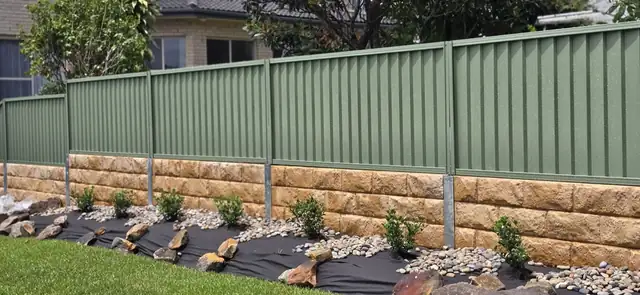
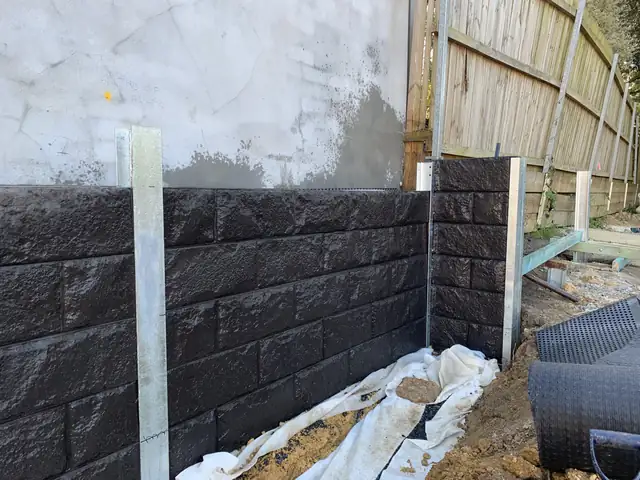
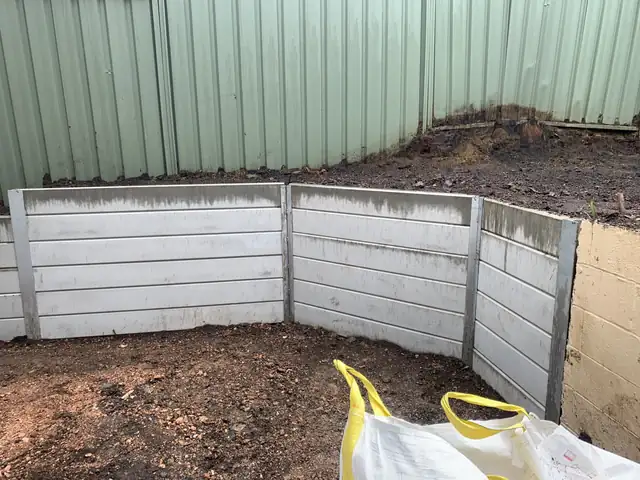
Most of the walls in our job photos are concrete sleeper walls — charcoal block-look, timber-grain grey, smooth white and sandstone-look — on boundaries, garden terraces, driveways and cut-and-fill building sites.
What makes a concrete sleeper wall last
The sleepers are rarely what fails. When a sleeper wall leans or bows, it is almost always one of three things that happened below ground on day one:
- Post footings too shallow or too small. The steel posts do the real work. Post size, spacing and footing depth must suit the wall height and what sits above it (a driveway, a pool, a slope). We size them to the manufacturer's engineering tables — and to an engineer's design where the wall needs one.
- Wrong post type or no galvanising. We use hot-dip galvanised H-posts and C-posts for corners and ends, set in concrete — not painted mild steel that rusts through in a few years.
- No drainage. Water trapped behind the wall is the number one killer. Every wall gets slotted ag pipe, clean aggregate backfill and geotextile fabric — see retaining wall drainage.
Finishes and colours
Concrete sleepers now come in far more than plain grey. Popular choices in Sydney include:
- Sandstone-look / rock-face — a warm, textured face that suits Sydney's natural sandstone gardens.
- Charcoal block-look — modern and clean; pairs well with Colorbond and timber fences.
- Timber-grain — the look of timber sleepers without rot or termites.
- Smooth white / light grey — bright, minimal and easy to paint or render later.
Sleepers are typically 2m or 2.4m long, 200mm high and 80mm thick, so walls go up in neat 200mm steps. We'll bring samples to your site visit.
Concrete sleepers vs timber vs sandstone
Concrete sleepers cost more than treated pine up front, but last several times longer and need no maintenance. They cost less than natural sandstone or engineered block walls and go in much faster, because the posts carry the load rather than a heavy mass of stone. For a side-by-side of prices, see our retaining wall cost guide.
Height, boundaries and approvals
Lower garden walls can often be built without council approval, but walls over about 600mm, walls on or near a boundary, and walls that support a driveway, building or pool usually need approval and an engineer's design. We check this before we quote — read our NSW council approval guide for the details, or see engineered retaining walls for taller walls.
Recent work
Frequently asked questions
How long do concrete sleeper retaining walls last?
Reinforced concrete sleepers are typically designed for a 50-year-plus life. The parts that decide how long the wall actually lasts are the galvanised posts, the footings and the drainage — which is why we never cut corners on those.
How high can a concrete sleeper wall be?
Garden walls up to around 1m are common. Taller walls are possible with larger posts and deeper footings, but walls over roughly 1m (or lower walls carrying a driveway, building or slope above) need an engineer's design and usually council approval.
Can you build a concrete sleeper wall on a boundary?
Yes — boundary walls are one of our most common jobs. Walls on or near a boundary usually need approval and neighbour consideration, and the wall must be fully within your property. We'll explain the options at the site visit.
Do concrete sleepers crack?
Good-quality reinforced sleepers rarely crack when they are installed with the right post spacing and drainage. Cracking is usually a sign of excess water pressure or posts that have moved — both installation issues, not sleeper issues.