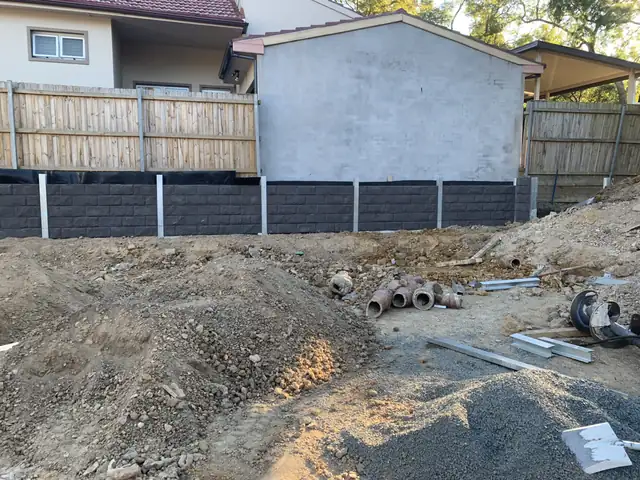
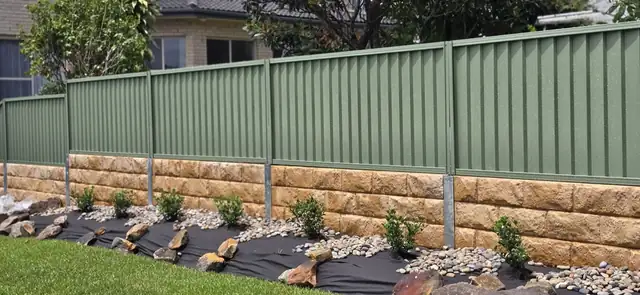
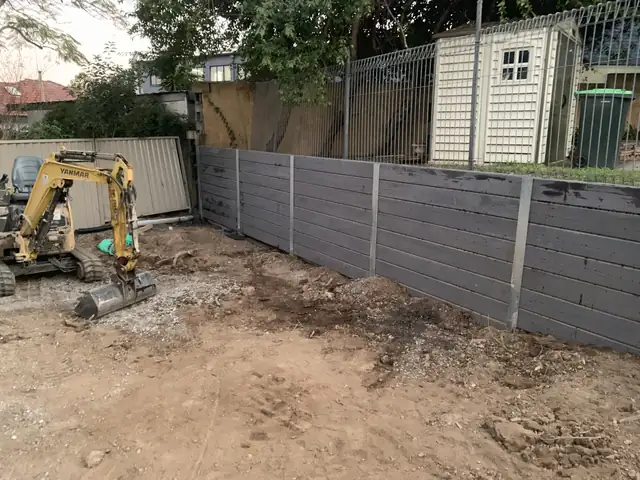
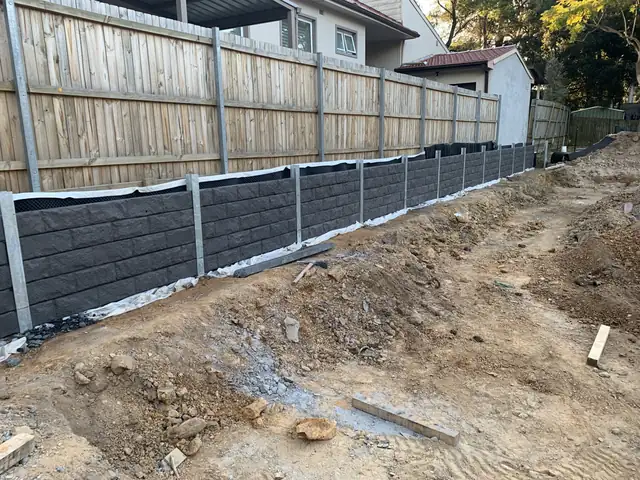
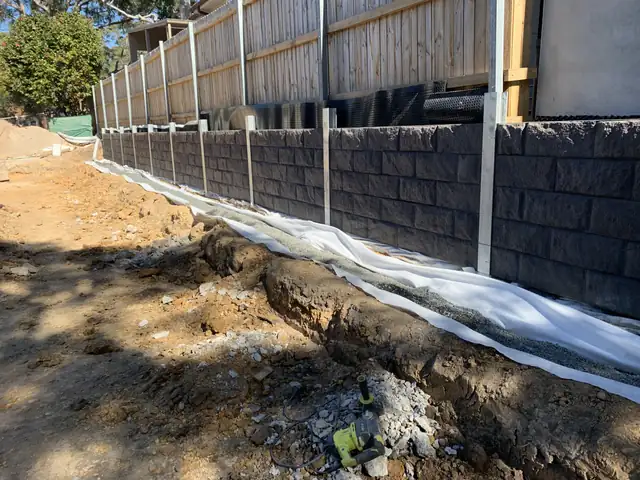
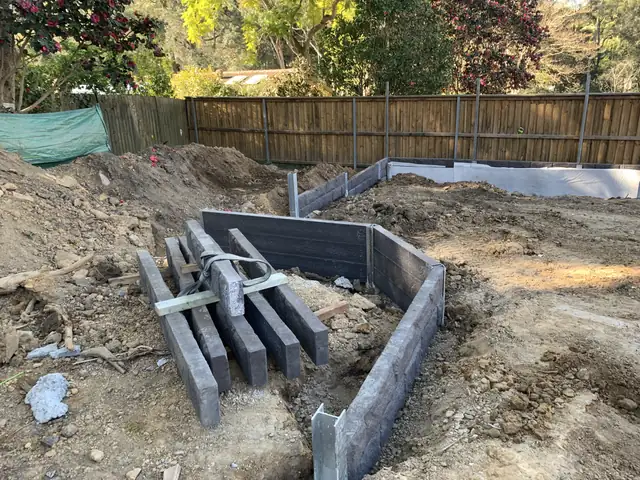
Timber retaining walls use treated pine or hardwood sleepers, held either by timber posts or by galvanised steel posts set in concrete. They have a warm, natural look, are quick to build and cost less up front than any other type of wall.
Timber options
- Treated pine sleepers — the budget option. Sleepers in contact with soil should be at least H4 treated, and in-ground posts H5.
- Hardwood sleepers — denser, heavier and longer lasting than pine, with a rich natural colour that greys over time.
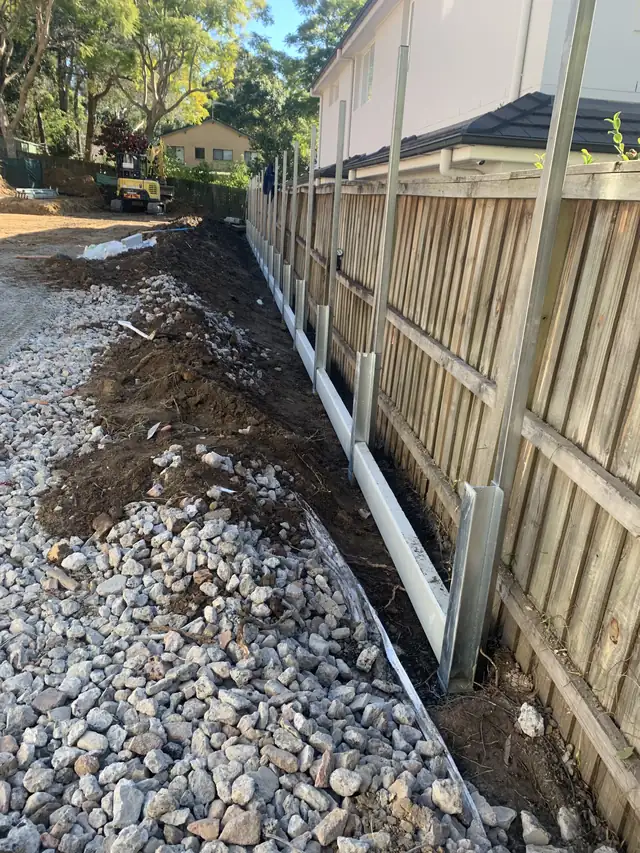
- Timber sleepers with steel posts — our preferred method. Galvanised steel posts don't rot at ground level, which is exactly where timber posts usually fail first.
How long does a timber retaining wall last?
Expect roughly 15–20 years from well-built treated pine and longer from good hardwood, depending on drainage, soil and termite activity. The biggest factors are keeping water away from the timber (ag pipe, aggregate backfill and geotextile — see drainage) and using steel posts rather than timber posts.
Honest advice: for garden beds and walls under about 600mm, timber is great value. For boundary walls, walls over 600mm, or walls holding up a driveway or building, we usually recommend concrete sleepers — they cost more up front but typically last several times longer, and timber-grain concrete sleepers give you a very similar look.
Where timber walls work best
- Raised garden and vegetable beds
- Low terracing on gentle slopes
- Edging lawns, paths and play areas
- Temporary or short-term walls on sites you plan to redevelop
Bushfire-prone land
Parts of the Upper North Shore, Hills District, Northern Beaches and Sutherland Shire are mapped bushfire-prone land. Timber is combustible, so on these blocks — especially close to the house — concrete or stone walls are often the better choice. We'll flag this at the site visit.
Replacing an old timber wall
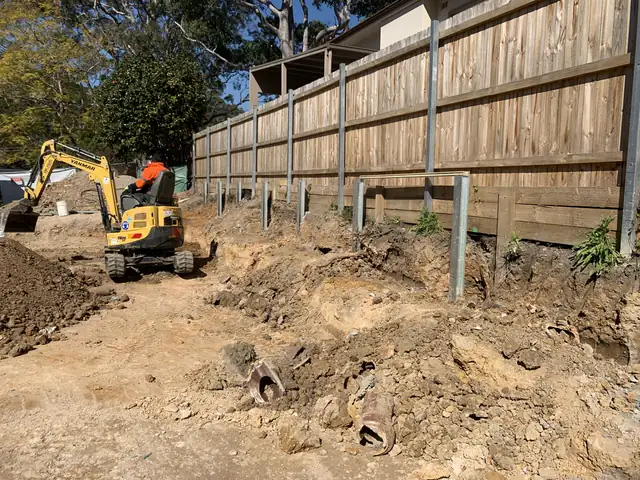
Many Sydney homes have 20–30-year-old pine walls that are now rotting, leaning or full of termites. We remove the old wall, re-cut and drain the batter properly and rebuild — usually in concrete sleepers so you don't need to do it again. See repairs & replacement.
Recent work
Frequently asked questions
What timber should be used for a retaining wall?
Treated pine sleepers in contact with soil should be at least H4, with H5 for in-ground posts. Hardwood sleepers last longer. We prefer galvanised steel posts over timber posts because they don't rot at ground level.
Is timber or concrete better for a retaining wall?
Timber is cheaper up front and suits low garden walls. Concrete sleepers cost more but typically last several times longer, are termite-proof and suit boundary walls and anything over about 600mm.
How do you stop a timber retaining wall rotting?
Keep water away from it: ag pipe at the base, clean aggregate backfill and geotextile fabric behind the sleepers, plus steel posts instead of timber. Good drainage adds years to any timber wall.