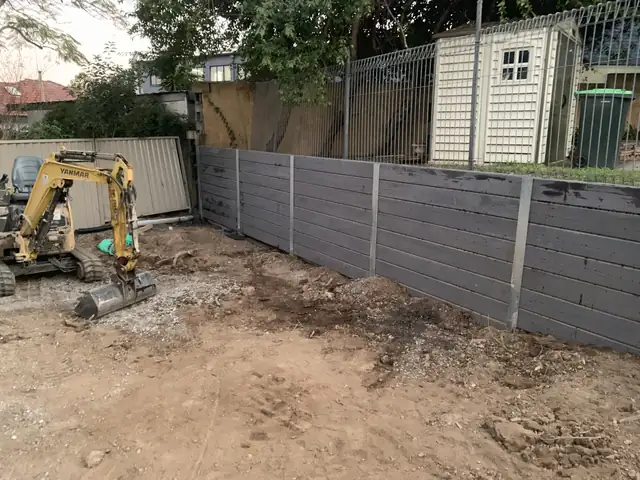
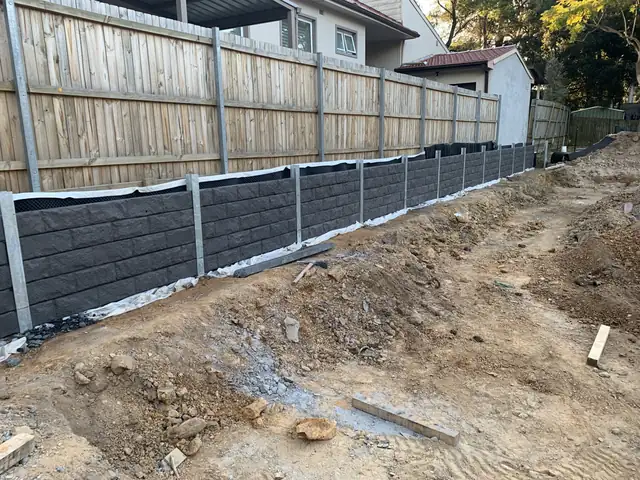
Soil that is soaked with water weighs more and pushes harder against a wall. After a big Sydney storm, the pressure behind a poorly drained wall can be many times what it was on a dry day. That is why good retaining walls are designed to let water out, not hold it in.
What proper retaining wall drainage looks like
- Slotted ag pipe at the base — typically 100mm slotted pipe in a filter sock, laid behind the bottom of the wall with a fall so it runs to an outlet.
- Clean aggregate backfill — a zone of free-draining gravel (commonly 20mm) behind the wall, instead of clay or site spoil, so water can reach the pipe.
- Geotextile fabric — wrapped between the soil and the gravel so fine silt doesn't wash in and clog the drainage over time.
- A legal outlet — the ag pipe must discharge to an approved stormwater point, pit or dispersal area, not onto your neighbour's property.
- Surface water control — where needed, a spoon drain or strip drain at the top of the wall so runoff doesn't pour down behind it.
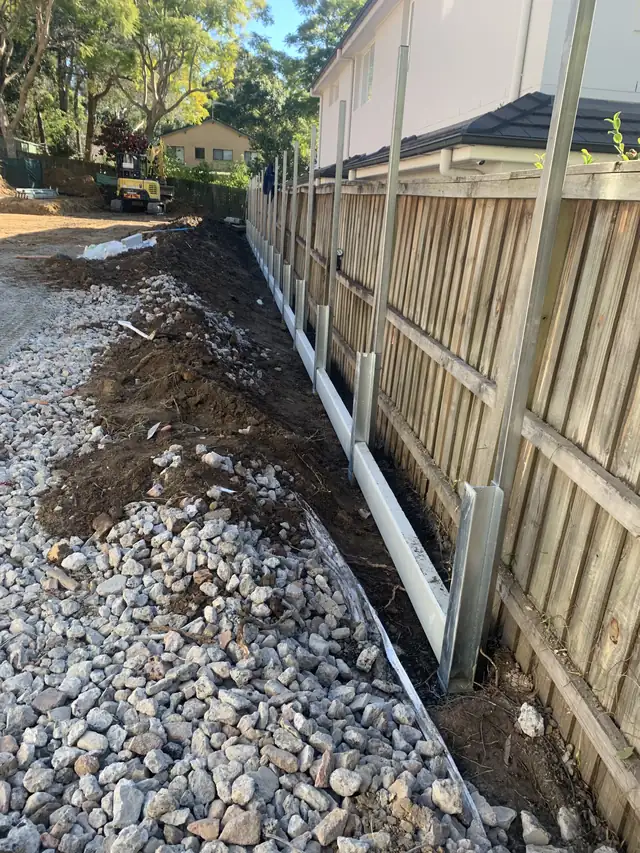
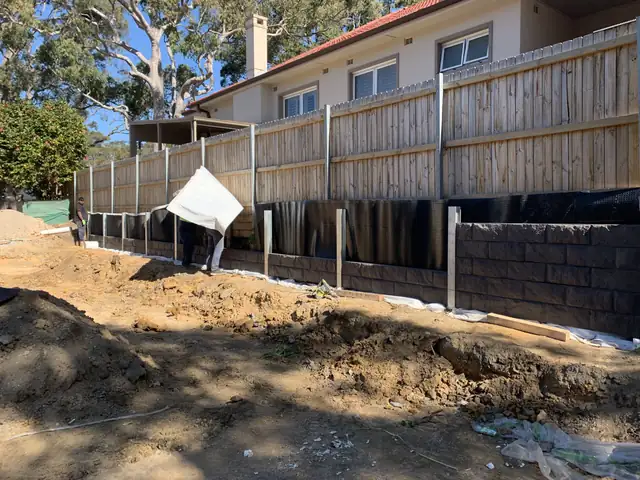
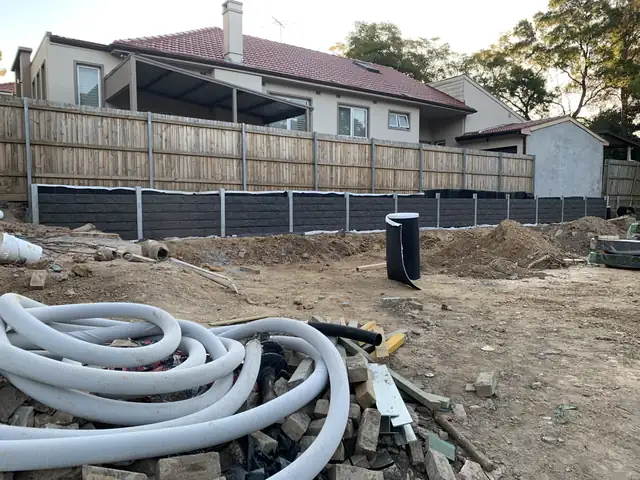
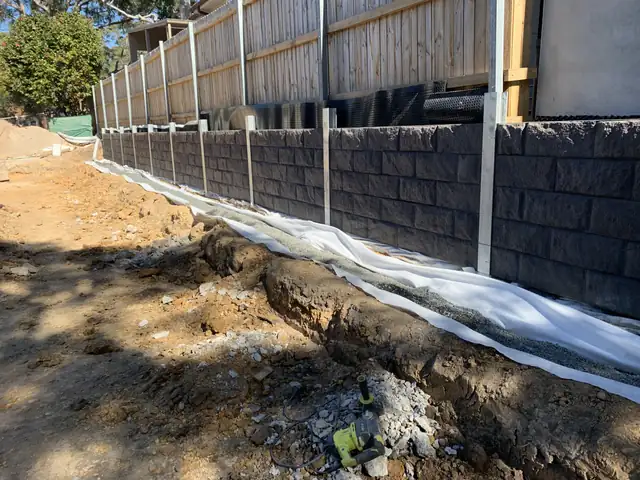
Real drainage on one of our concrete sleeper wall builds: aggregate backfill, geofabric and ag pipe going in before the wall is backfilled.
Signs your existing wall has a drainage problem
- Water seeping through the face or joints after rain
- White powdery staining (efflorescence) or moss on block and stone walls
- Soggy ground or ponding at the top or bottom of the wall
- The wall has started to lean or bow
Can drainage be added to an existing wall?
Often, yes. Depending on access, we can excavate behind the wall in sections, install ag pipe, aggregate and geotextile and reconnect to stormwater — or add weep holes and a strip drain. If the wall has already moved significantly, it may be better to rebuild — see retaining wall repairs.
Walls against the house
Where a retaining wall forms part of, or sits against, a habitable room, the back of the wall also needs waterproofing (a membrane and protection board) to stop damp coming through. This is common on cut-in sites and under-house excavations.
Recent work
Frequently asked questions
Does a retaining wall need drainage?
Yes. Almost every retaining wall needs drainage behind it. Without it, water builds up pressure behind the wall — the most common reason walls lean and fail.
Where should retaining wall drainage go?
The ag pipe should run with a fall to an approved outlet: a stormwater connection, pit or suitable dispersal area on your property. It must not discharge onto a neighbour's land.
What gravel is used behind a retaining wall?
Clean, free-draining aggregate — commonly 20mm — wrapped in geotextile fabric so silt doesn't clog it. Clay or site spoil should not be used as the drainage zone.